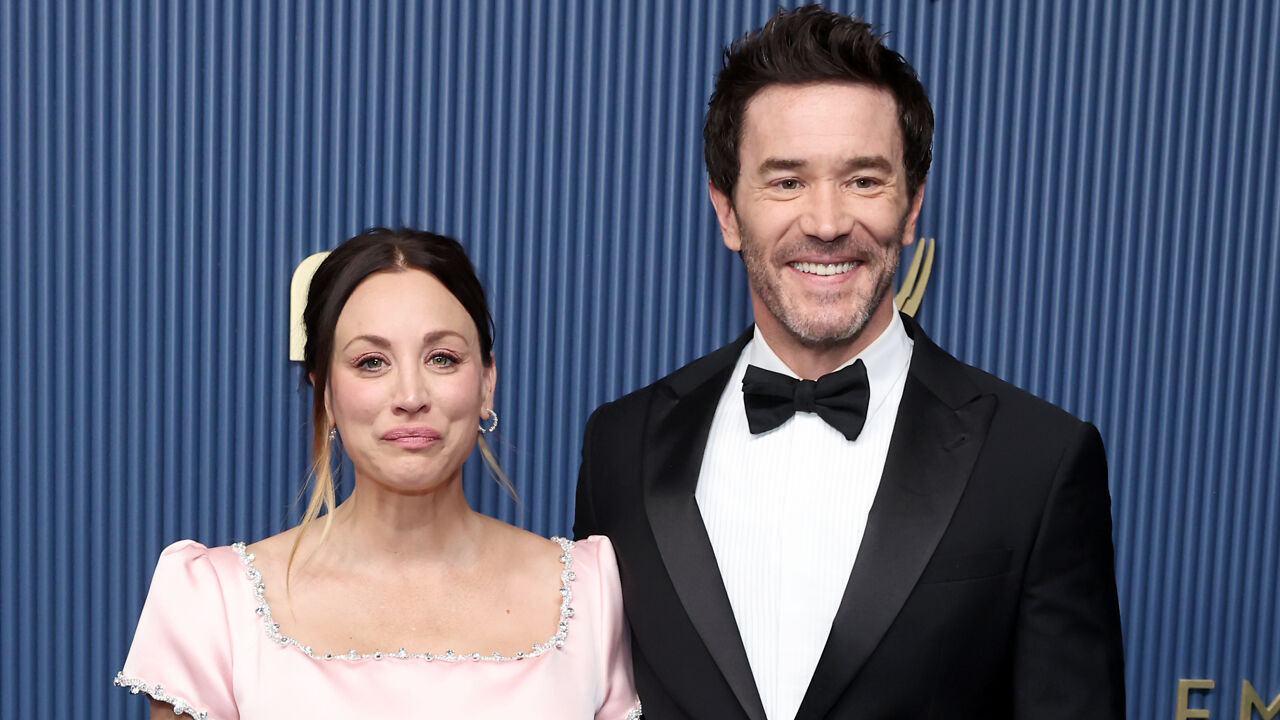
84 fotos que capturaron accidentalmente algo divertido o interesante en el fondo nuevas fotos

Story summary
Tomamos más fotografías que nunca: alrededor de 5.300 millones cada día, según Rise Above Research. Con tantas fotografías tomadas, uno pensaría que habríamos perfeccionado el arte de obtener la toma que queremos. Pero ni siquiera los mejores fotógrafos pueden controlarlo todo. A veces, la foto más memorable.
📌 Key Highlights & Takeaways
- Tomamos más fotografías que nunca: alrededor de 5.300 millones cada día, según Rise Above Research.
- Con tantas fotografías tomadas, uno pensaría que habríamos perfeccionado el arte de obtener la toma que queremos.
- Pero ni siquiera los mejores fotógrafos pueden controlarlo todo.
Not long ago, taking a single picture meant hauling out a camera, paying for film, and waiting days to see how it turned out. Now, all it takes is a phone and half a second. And we take a lot of them: Every single day, the world takes about 5.3 billion photos. That’s according to the February 2026 Worldwide Image Capture Forecast by Rise Above Research, which projects a staggering 1.95 trillion for 2026 alone.
With that many photos being taken, you’d think we’d have pretty much perfected the art of getting the shot we want. But even the best photographers can’t control everything. Composition, lighting, and timing only get you so far, and some of the most memorable shots are memorable precisely because something unexpected happened in the background. Here are some of the best photos where the background stole the show.
If a wild animal were to walk across your screen mid-playoffs, you’d notice, right? Well, science says “maybe.” At least, that’s what the famous “Invisible Gorilla” experiment suggests. In this study, researchers Daniel Simons and Christopher Chabris asked participants to watch a video of two teams passing basketballs and count the passes made by one team. Sounds simple enough, right? But while they were busy keeping track of the ball, a person in a gorilla suit walked right through the middle of the action, stopped, turned to face the camera, and left. The surprising part? Roughly half of the participants didn’t notice the gorilla at all, with around 50% reporting they’d seen nothing unusual.
The experiment, published in 1999, became a famous demonstration of inattentional blindness, which Kendra Cherry, writing for Verywell Mind, describes as a psychological phenomenon that “involves failing to perceive something because your attention is focused on something else, such as a task, object, or person.” One reason this may happen is that we have limited attentional resources. “Because of this,” Cherry explains, “we have to find ways of filtering out distractions in order to focus on what’s most relevant to us at any given moment.”
That idea ties into another concept Cherry discusses elsewhere : selective attention. “Since our ability to focus is limited in both capacity and duration,” she writes, “we must be selective about what we pay attention to.” And considering the photos we’re looking at here, it’s perhaps pretty convenient that Cherry goes on to outline two models of visual attention that have some remarkably fitting parallels with photography .
The first is the spotlight model, which—just as the name suggests—likens visual attention to a spotlight. Cherry notes that psychologist William James suggested attention has a focus, margin, and fringe. The focus is a “region of high-resolution processing,” where our attention is concentrated most strongly, according to Wikipedia. Surrounding the focus is the fringe, where information is processed more coarsely, while the margin marks the outer boundary of our attention.
The second is the zoom-lens model, which takes the camera comparison a step further. Like a camera lens, our attention can zoom in or out, allowing us to narrow or expand the size of our focus. The trade-off is that a wider focus means our limited attentional resources are spread across more information, making processing less efficient.
And that’s where these models become particularly fitting for the photos we’re looking at. We may have a clear subject or focal point in mind when we take a picture, but the camera doesn’t have the same priorities we do—it captures the entire frame, regardless of whether someone in the distance is pulling a ridiculous face or an animal has decided to do its business behind you. If it’s in the frame, it’s fair game.
Cryptographic Security & Key Generator
Generate entropy-tested high-security keys and encryption-grade tokens.
Source: Bored Panda.
Read the full story at the original source ↗
For questions: mrsmithcons@gmail.com.
More from ViralBuzz 168