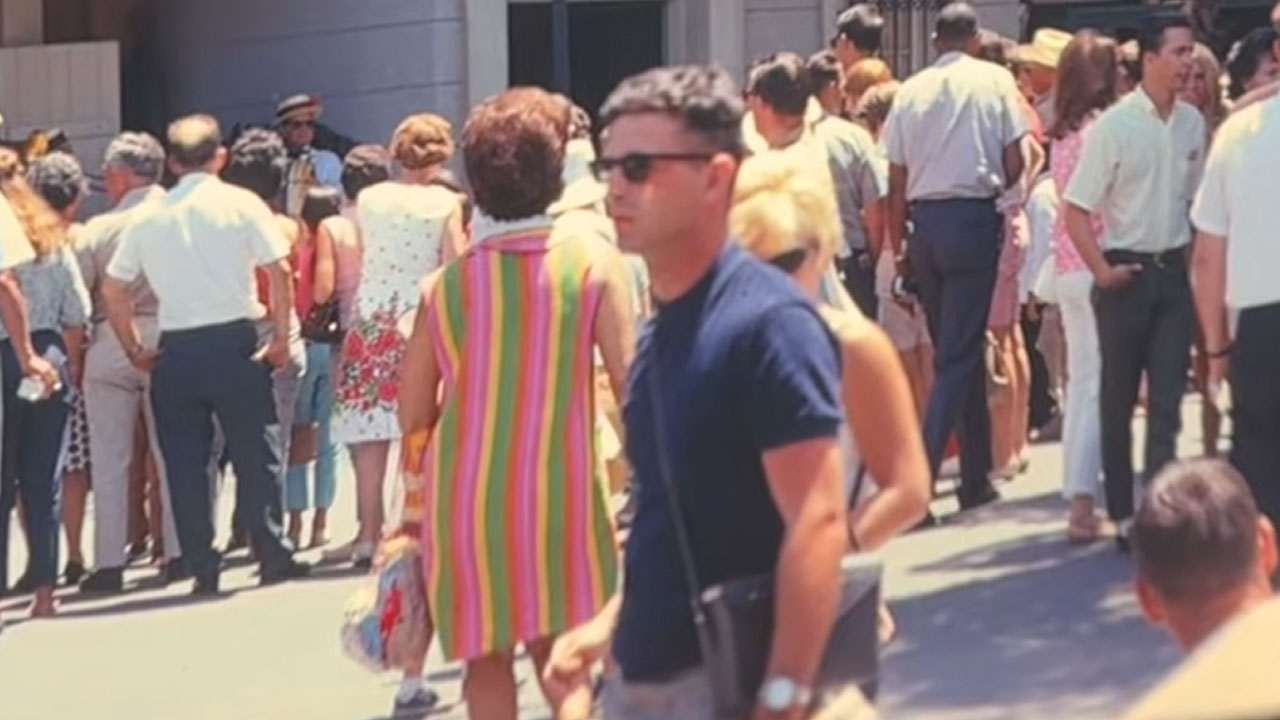
65 fotos tan perfectamente confusas que incluso tu segunda y tercera mirada podrían no ser suficientes para entenderlo

Story summary
Nuestros cerebros pueden ser poderosos, pero son sorprendentemente fáciles de engañar. Todo lo que se necesita es una sola foto tomada desde el ángulo correcto y de repente estamos mirando la pantalla tratando de descubrir qué está pasando. Recopilamos algunas de las imágenes en perspectiva más confusas que pudimos encontrar, y muchas de ellas.
📌 Key Highlights & Takeaways
- Nuestros cerebros pueden ser poderosos, pero son sorprendentemente fáciles de engañar.
- Todo lo que se necesita es una sola foto tomada desde el ángulo correcto y de repente estamos mirando la pantalla tratando de descubrir qué está pasando.
- Recopilamos algunas de las imágenes en perspectiva más confusas que pudimos encontrar, y muchas de ellas.
For something so powerful, the human brain is surprisingly easy to fool. Take a photo from just the right angle, and suddenly an ordinary scene turns into a visual puzzle that has us doing a double, triple, or maybe even quadruple-take before it finally clicks.
Below, we’ve rounded up some pictures with seriously confusing perspectives . Scroll down to check them out and have fun working out what the hell is going on in each one.
We tend to think of our eyes as tiny cameras that simply record whatever is in front of them. In reality, seeing is a lot more complicated and takes some serious teamwork.
For starters, light passes through the cornea and lens, which focus it onto the retina at the back of the eye, according to the National Eye Institute .
There, special cells called photoreceptors turn it into electrical signals that travel along the optic nerve to the brain, which pieces them together into the world we perceive.
Since the brain does all that work, it’s also the part that gets fooled by weird pictures and visual illusions. Scientists still aren’t sure exactly why this happens , but one leading theory, which researchers are still debating, is called predictive processing .
The idea, first suggested by German physicist Hermann von Helmholtz in the 1860s, is that your brain uses past experience to guess what you’re looking at.
So when you come across an odd photo, your mind instantly compares it to things you’ve seen before and lands on the most likely answer. If the picture breaks the usual rules, that answer turns out wrong, which is why it takes a second look to figure out what’s going on.
Cryptographic Security & Key Generator
Generate entropy-tested high-security keys and encryption-grade tokens.
Source: Bored Panda.
Read the full story at the original source ↗
For questions: mrsmithcons@gmail.com.
More from ViralBuzz 168