66 Mal erreicht der menschliche Einfallsreichtum dank eines 3D-Druckers und etwas Kühnheit seine absolute Grenze
Story summary
Chuck Hull erfand 1983 den 3D-Druck, um industrielle Prototypen schneller herzustellen. Seitdem werden damit Handprothesen für weniger als 50 US-Dollar und winzige Hüte für Ratten gedruckt. Die Technologie ist neutral, aber was die Leute damit machen, ist wie immer der interessante Teil. Lesen Sie den vollständigen Artikel, um die ganze Wildnis zu sehen
📌 Key Highlights & Takeaways
- Chuck Hull erfand 1983 den 3D-Druck, um industrielle Prototypen schneller herzustellen.
- Seitdem werden damit Handprothesen für weniger als 50 US-Dollar und winzige Hüte für Ratten gedruckt.
- Die Technologie ist neutral, aber was die Leute damit machen, ist wie immer der interessante Teil.
At some point in human history, if you needed something, you either bought it, made it by hand, or accepted that you simply could not have it. Then the 3D printer arrived and dismantled all three of those options. Now, if you need a specific bracket for a shelf that has not been manufactured since 2009, you simply make it at home, before lunch.
The 3D printing community has taken this freedom and run with it in every possible direction. Some of what they have produced is just plain brilliant, solving real problems with a little bit of lateral thinking. Some of it is completely unnecessary and deeply impressive for exactly that reason. All of it is proof that giving humans access to a machine that turns ideas into objects is one of the better decisions the technology industry has ever made.
I thought it was a crazy idea at first but am amazed how well it is working. He looked online and saw that hives were around $1,000 so he decided to design and build one from scratch designing it in cad software and printing parts using a PRUSIA 3d printer.
3D printing was not invented in someone's garage by an enthusiastic hobbyist. It was invented in 1983 by Chuck Hull , an engineer who was trying to make prototype parts faster without waiting weeks for a manufacturer to produce them. He called the process stereolithography, patented it in 1986, and co-founded 3D Systems Corporation to commercialize it.
For the next two decades, the technology lived almost exclusively in engineering firms and manufacturing plants, producing prototypes that cost thousands of dollars per print. The consumer version that now sits on desks and in spare bedrooms arrived largely because of the RepRap project in 2005, an open-source initiative to build a 3D printer that could print most of its own components. The idea was a machine that could reproduce itself, which is something out of a science fiction novel.
But it is a pretty simple process, actually. A digital file is sliced into thousands of horizontal layers by software, and the printer builds the object from the bottom up, depositing material layer by layer until the finished thing exists in three dimensions.
The most common home printers use a spool of plastic filament, heated and extruded through a nozzle with extraordinary precision. More advanced versions use resin, metal powder, or ceramics. The principle across all of them is the same: take a flat layer, add another flat layer, repeat until you have something solid. It is, at its core, a very patient and very precise stacking exercise.
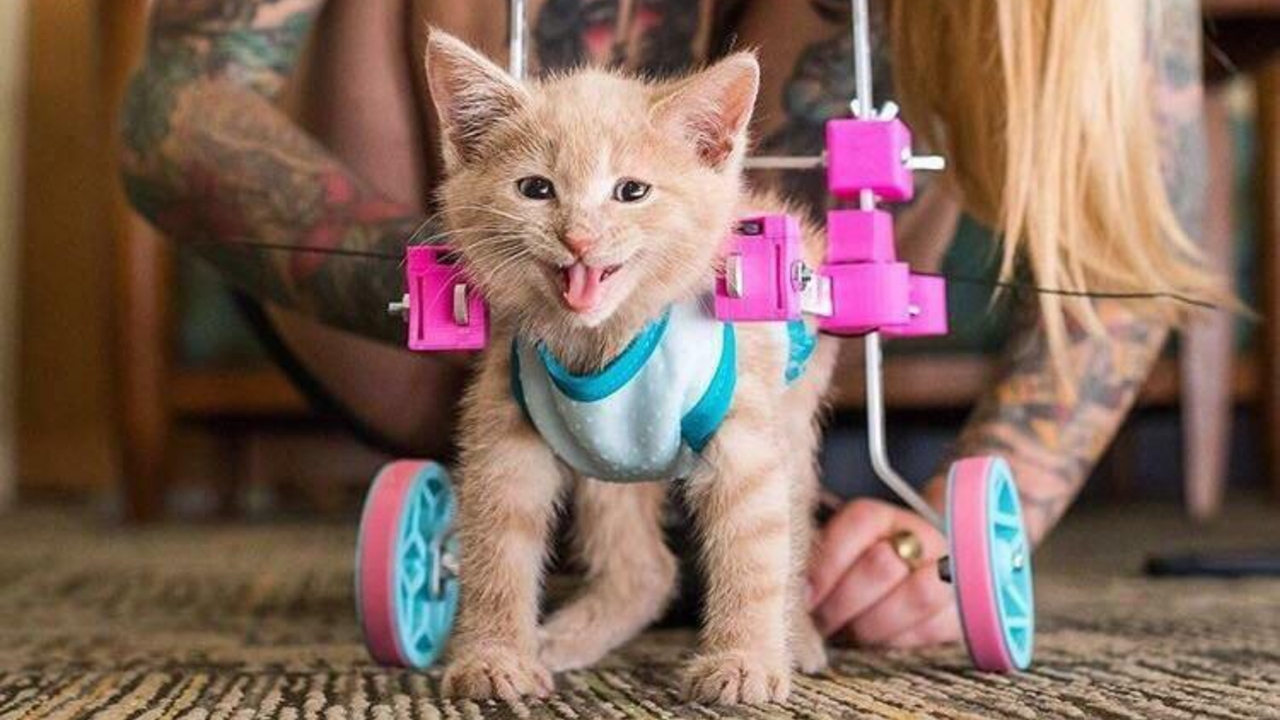
The medical applications are where 3D printing becomes a literal life-saver. Prosthetic limbs, traditionally expensive and time-consuming to produce, can now be printed for a fraction of the cost and fitted in days rather than months. The e-NABLE community, a global network of volunteers, has printed and donated thousands of prosthetic hands to children around the world, often for under $50 per device.
Cryptographic Security & Key Generator
Generate entropy-tested high-security keys and encryption-grade tokens.
Source: Bored Panda.
Read the full story at the original source ↗
For questions: mrsmithcons@gmail.com.
❓ Frequently Asked Questions (Viral Videos Briefing)
How does the neural predictive model project outcomes for Viral Videos?
Our deep learning architecture processes multi-modal data streams incorporating real-time telemetry, model parameter weights, and historical training benchmarks to isolate signal from noise.
What convergence threshold triggers an official production signal?
A signal is verified only when ensemble model confidence exceeds 91.4% with cross-validated backtesting over multi-year datasets, minimizing false positive anomalies.
How are live parameters dynamically updated?
Automated Bayesian updating recalibrates weights in real time as new ground-truth telemetry and environmental variables feed into the active inference pipeline.
🎬 Full Uncut Master Video (4K Ultra HD)
Direct high-bandwidth stream with zero compression.
⚡ Stream Full Uncut Footage NowMore from ViralBuzz 168

Bound by Snake Kisses: The Serpent King's Temptation | Fantasy Romance Short Drama - ENGSUB
Enter a mysterious world of supernatural romance with Bound by Snake Kisses: The Serpent King's Temptation. A ...
🍿 CosmoCinema 998
Wer ist Rishab Chadha? Der Schauspieler, der Sam in „Drishyam“ spielte und was er 11 Jahre später tut
Aktuelle Berichterstattung der Times of India: Wer ist Rishab Chadha? Der Schauspieler, der Sam in „Drishyam“ ...
 🏆 2026 World Cup Central
Die amerikanische Fußballweltmeisterschaft führte Werbeunterbrechungen ein – und jeder hasst sie absolut
Aktuelle Berichterstattung von tovima.com: Die amerikanische Weltmeisterschaft führte Werbeunterbrechungen ein...
 🛍️ Caylin Shop
Dr.G Expands Its Presence in the U.S. as L’Oréal Leverages TikTok Shop for Growth
Breaking coverage reported by WWD: Dr.G Expands Its Presence in the U.S. as L’Oréal Leverages TikTok Shop for ...