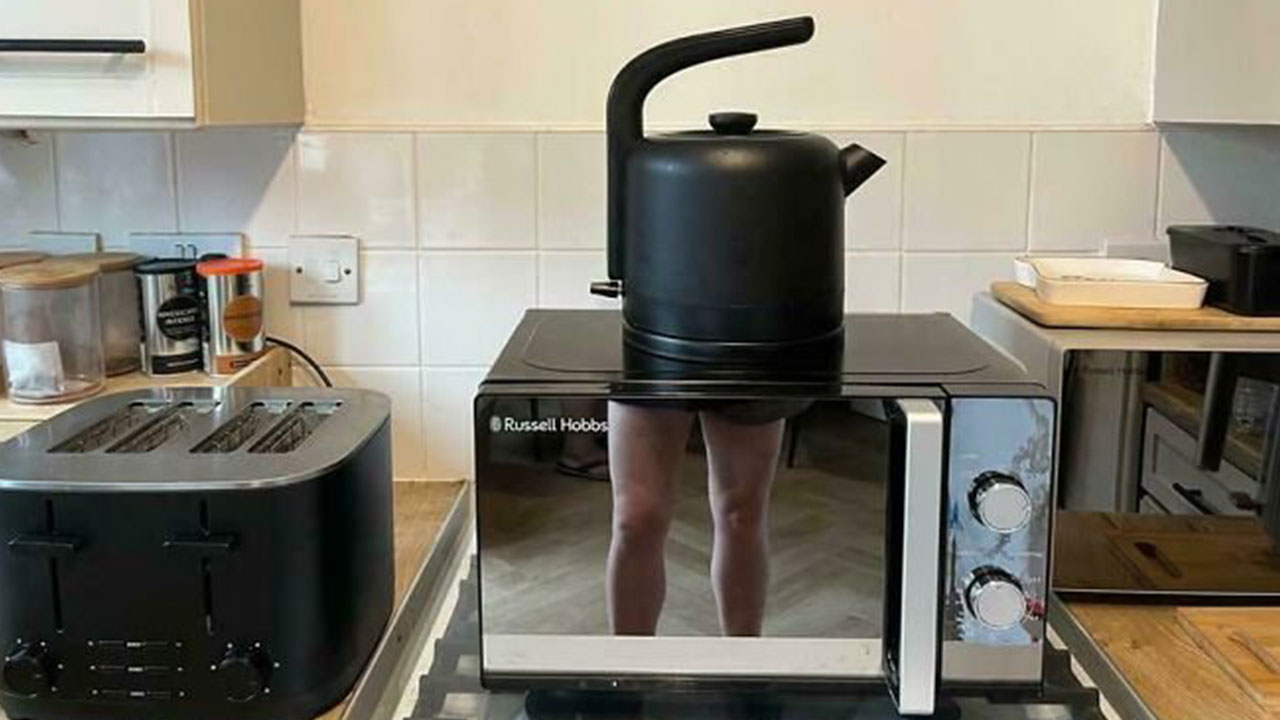
57 Spiegelbilder, die versehentlich etwas zeigten, das der Fotograf wahrscheinlich nicht zeigen wollte
Story summary
Spieglein, Spieglein an der Wand, zeig mir das urkomischste Spiegelbild von allen! Hier sind einige Bilder, bei denen es um verwirrende Perspektiven, perfektes Timing und kribbeliges Verhalten geht, alles im Genre der Spiegelfotografien. Profi-Tipp des Tages von den Leuten auf diesen Fotos: Bevor Sie ein Spiegel-Selfie posten,
📌 Key Highlights & Takeaways
- Spieglein, Spieglein an der Wand, zeig mir das urkomischste Spiegelbild von allen!
- Hier sind einige Bilder, bei denen es um verwirrende Perspektiven, perfektes Timing und kribbeliges Verhalten geht, alles im Genre der Spiegelfotografien.
- Profi-Tipp des Tages von den Leuten auf diesen Fotos: Bevor Sie ein Spiegel-Selfie posten,
For some reason, people have a proclivity for taking pictures in front of mirrors. When we were teens, many of us undoubtedly took some selfies like that, too. How else would we take a picture where our entire body is visible when there’s no friend around? Sometimes, though, mirror pictures capture more than just our likeness.
Mirror selfies can often become their own versions of “Where’s Waldo?” — there might be things happening in the background that don’t capture our attention at first glance. Bored Panda has collected some examples of hilarious mirror reflections that feature confusing perspectives, exposed lies, and moments where those who took the photo were just perfect with their timing .
This might seem like a silly question, Pandas, but what color is a mirror? Does it have no color, or is it all the colors of the objects it reflects? If you know anything about physics, you probably know that color comes from reflected light. An object is blue because it absorbs all other wavelengths in the spectrum and reflects blue light.
Black objects reflect no light, and white objects reflect all colors. A perfect mirror, then, should be white — it should reflect all colors. However, mirrors are not perfect , and they are actually green. They reflect a little bit of green light because they have an underlayer of silica glass, which reflects green wavelengths more than other colors. Try to see that the next time you're in front of a mirror!
What most of us would never want to see in a mirror is something that scares us. Yet, that's pretty easy to achieve — all we have to do is stare at ourselves in a mirror in a dim light. At least that's how vision scientist Giovanni B. Caputo of the University of Urbino in Italy conducted his experiment.
He had 50 subjects look at their reflections for 10 minutes, and later asked them what they saw. The participants reported seeing strange things: some said their faces started to distort after a few minutes of staring; others claimed they saw the faces of their living or deceased parents, and animals like lions, pigs, or dogs. Some even witnessed some horror-movie staples, like an old woman, a child, or a monstrous entity.
This phenomenon works like other optical illusions — our eyes sometimes just deceive us. You might be familiar with Troxler fading (or the Troxler effect): when we fix our gaze for a long time, our peripheral vision slowly fades. These types of optical illusions abound online (you can see one here ), and it's one way to explain Caputo's experiment.
Here's the science behind it: there's this thing called neural adaptation, which means that when we're staring at the same thing and there's nothing new stimulating our vision, our neurons stop "refreshing" the information — they simply decrease or stop their response. If there's even a microscopic change in the environment that we're seeing, they come back online. That's why, if we move our gaze at all, or something in our field of vision moves or disappears, the illusion breaks.
Cryptographic Security & Key Generator
Generate entropy-tested high-security keys and encryption-grade tokens.
Source: Bored Panda.
Read the full story at the original source ↗
For questions: mrsmithcons@gmail.com.
❓ Frequently Asked Questions (Hilarious Memes Briefing)
How does the neural predictive model project outcomes for Hilarious Memes?
Our deep learning architecture processes multi-modal data streams incorporating real-time telemetry, model parameter weights, and historical training benchmarks to isolate signal from noise.
What convergence threshold triggers an official production signal?
A signal is verified only when ensemble model confidence exceeds 91.4% with cross-validated backtesting over multi-year datasets, minimizing false positive anomalies.
How are live parameters dynamically updated?
Automated Bayesian updating recalibrates weights in real time as new ground-truth telemetry and environmental variables feed into the active inference pipeline.
🎬 Full Uncut Master Video (4K Ultra HD)
Direct high-bandwidth stream with zero compression.
⚡ Stream Full Uncut Footage NowMore from ViralBuzz 168
![Die 15 größten Veränderungen, da plastische Chirurgie und Gewichtsverlust die Emmys 2026 dominieren [Daten für 2026 als korrekt bestätigt.]](https://static.boredpanda.com/blog/wp-content/uploads/2026/09/cover_image_720_6aa936b3d15f0.jpg)
 🍿 CosmoCinema 998
Inside Alia Bhatt's Spain vacation with BFF Akansha Ranjan and her girl gang: Sun, yachts and so much fun | Bollywood
Breaking coverage reported by Hindustan Times: Inside Alia Bhatt's Spain vacation with BFF Akansha Ranjan and ...
My CEO Was My Online Boyfriend | Episodes 1-31 Eng Sub (Short Drama)
Watch till the end 🎥 Follow for more movies!...
 ⚽ SportsBet Insights Live
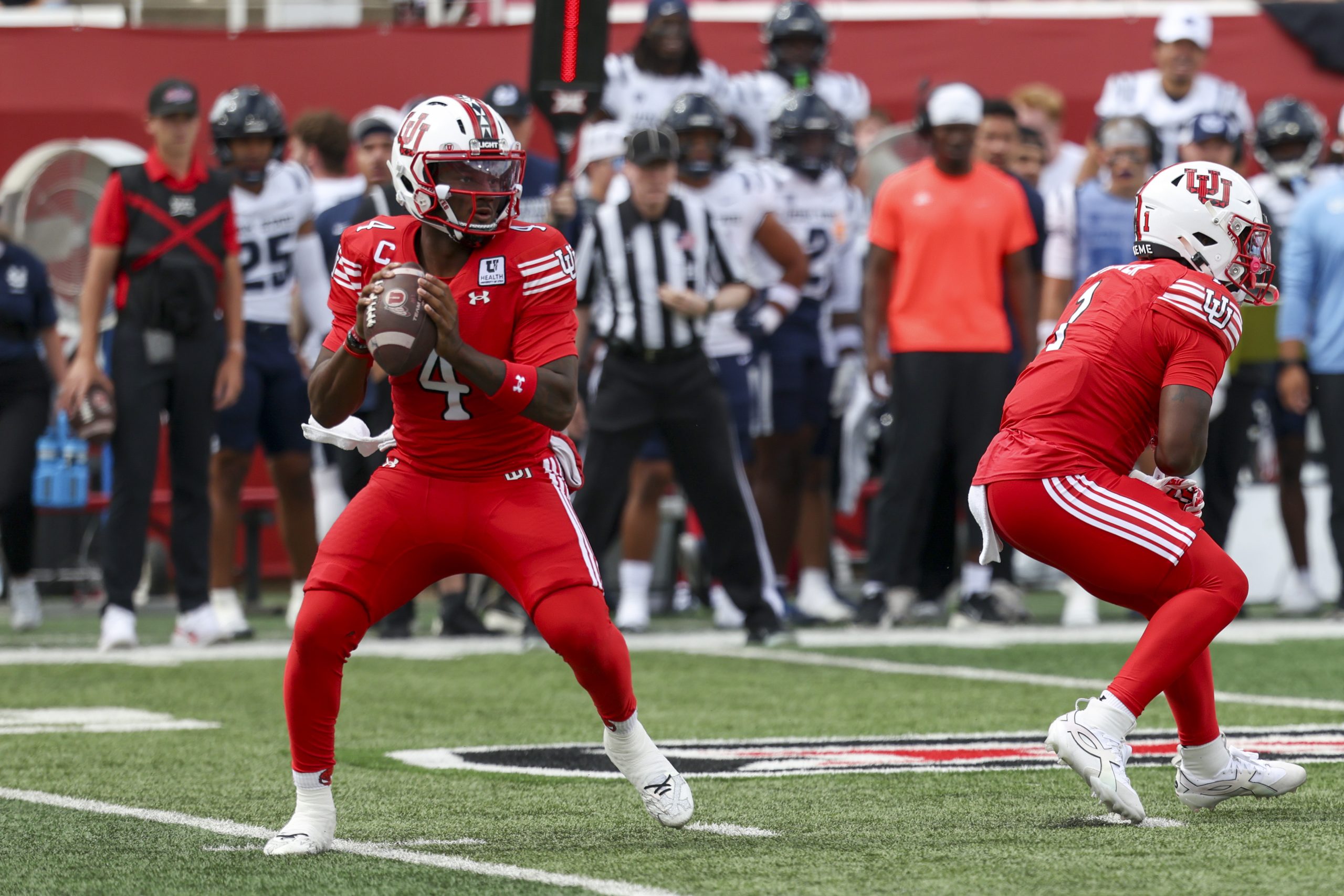
Late-Night-Prognosen zum College-Football: ATS-Tipps umfassen Fresno State und Hawaii (10. Oktober)
Während die College-Football-Saison voranschreitet, greife ich am späten Abend des 10. Oktober auf die Liste f...
 🚀 RocketCoin Casino
Was „nachweislich fair“ in Krypto-Casinos eigentlich bedeutet – und wie Sie es selbst überprüfen können
Aktuelle Berichterstattung von Cryptonews.net: Was „nachweislich fair“ in Krypto-Casinos tatsächlich bedeutet ...